 TRUE NORTH MINING
Permitted, documented, insured.
Offshore mining sits inside a regulatory framework that takes years to enter and continuous work to stay inside. That barrier protects the operators who have cleared it.
Discharge authorization
| Authority | Identifier | Scope |
|---|---|---|
| Alaska Department of Environmental Conservation | AKG374036 | Offshore mining discharge authorization — Nome offshore |
Vessel documentation
| Vessel | Official no. | Hull | Endorsements |
|---|---|---|---|
| M/V Nikola | 617891 | Steel, 1980 | Coastwise, Registry |
| M/V Stryker | 637873 | Steel, 1981 | Coastwise, Registry |
Corporate structure
| Entity | Jurisdiction | Role |
|---|---|---|
| True North Mining LLC | Minnesota, registered in Alaska | Parent |
| Nikola Holdings, LLC | Wyoming | Offshore mining vessel operations |
| Stryker Marine, LLC | Minnesota | Offshore mining vessel operations |
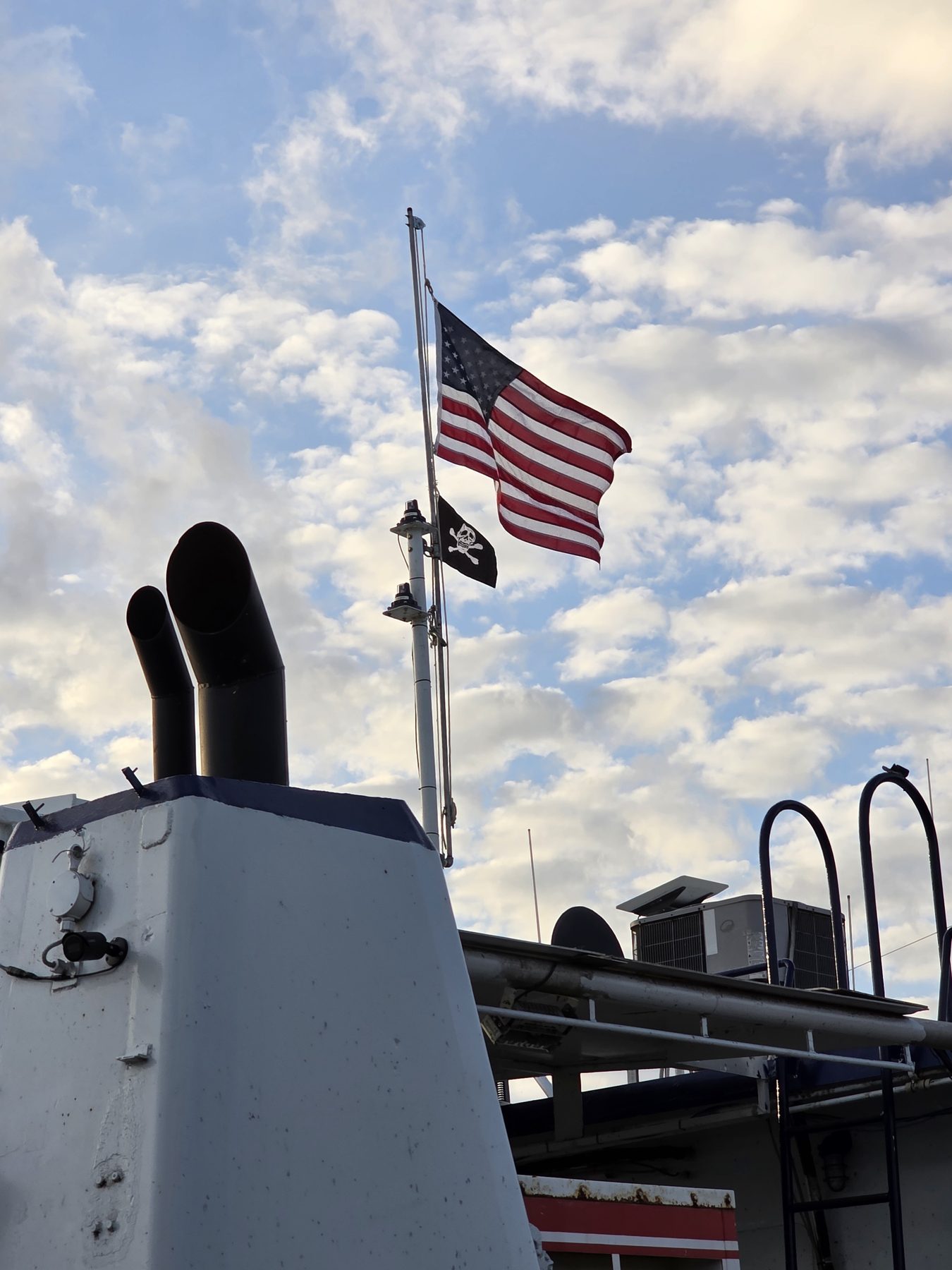
Americans don’ttake nofor an answer
American hulls. American owners. American crew. Not by preference — by statute.
Almost nothing about this operation is optional. Federal law decides who may own these vessels, where they had to be built, and who is allowed to stand a watch aboard them. That is a wall around the business, and True North is inside it.
The hulls had to be built here
A coastwise endorsement may be issued only to a vessel that“was built in the United States”(46 U.S.C. § 12112(a)(2)(A)), and merchandise may not move between US points except in a vessel“wholly owned by citizens of the United States” carrying that endorsement (46 U.S.C. § 55102(b)). Both of ours came out of Universal Iron Works at Houma, Louisiana — the Nikola in 1980, the Stryker in 1981. A foreign-built hull could not do this work at any price.
There is a law about this exact thing
Dredging in US navigable waters is restricted to US-owned, coastwise-endorsed vessels (46 U.S.C. § 55109(a)). Then subsection (b) appears, under its own heading —“Dredging of Gold in Alaska” — and provides that“[a] documented vessel with a registry endorsement may engage in the dredging of gold in Alaska.” Congress wrote a subsection of the United States Code about this, and only this. It is why both vessels carry a registry endorsement alongside the coastwise one.
Every officer aboard is an American
Only a citizen or noncitizen national of the United States may serve asmaster, chief engineer, radio officer, or officer in charge of a deck or engineering watch on a documented vessel (46 U.S.C. § 8103(a)). There is a waiver provision in the same section, and it does not reach the master under any circumstances. Whoever is in command of these vessels is an American, permanently, as a matter of law.
And at least three in four of the crew
Every unlicensed seaman must be a US citizen or national, a lawful permanent resident, or a Merchant Marine Academy cadet — and“not more than 25 percent” of them may be permanent residents (46 U.S.C. § 8103(b)(1)). Nobody else is eligible to be aboard at all. Every deckhand's wage on this operation is an American wage, and there is no lawful way to make it otherwise.
Statutory text above is quoted from the United States Code as published by the Legal Information Institute, checked 10 August 2026. This is a description of the framework the company operates in, not legal advice, and nothing here is an offer of any security.