Gold, recovered from the floor of the Bering Sea.
True North Mining operates a two-vessel fleet on the offshore placer ground off Nome — one of the few gold districts on earth where the richest deposits still lie underwater.
Nome has been a gold town since 1898. The beach was only the beginning.
The strike that drew tens of thousands north was found in the sand at the waterline. What the stampeders could not reach was the ground that kept going — out past the surf, under the Bering Sea, where ancient rivers and glacial action laid down placer deposits that no pan or rocker box could touch.
Offshore, not onshore
The beach and the tundra behind it have been worked for more than a century. The seafloor requires a vessel, a permit, and equipment that most operators do not have.
A short, hard season
Norton Sound is workable from roughly May to October. Everything — mobilisation, production, maintenance, demobilisation — has to fit inside that window.
Permitted operation
Offshore mining discharge is authorised by the Alaska Department of Environmental Conservation under AKG374036. The permitting framework is well established, and slow to enter.
Two vessels, eighty years apart.
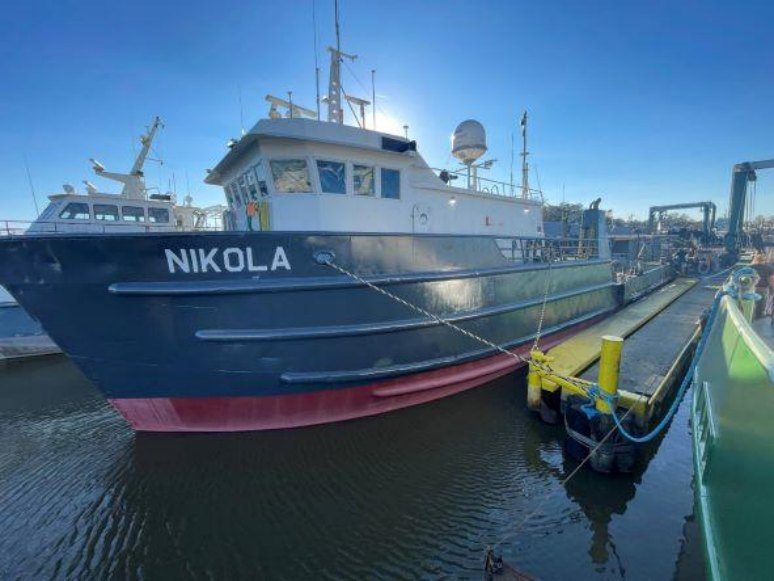
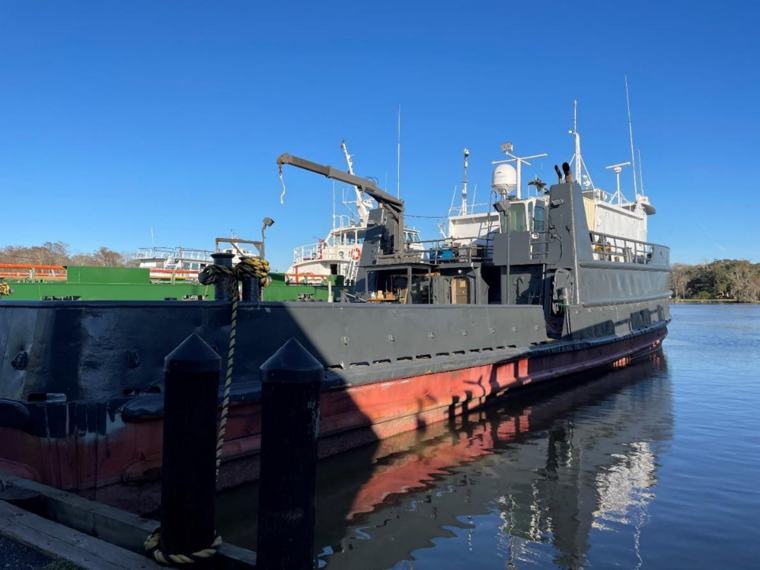
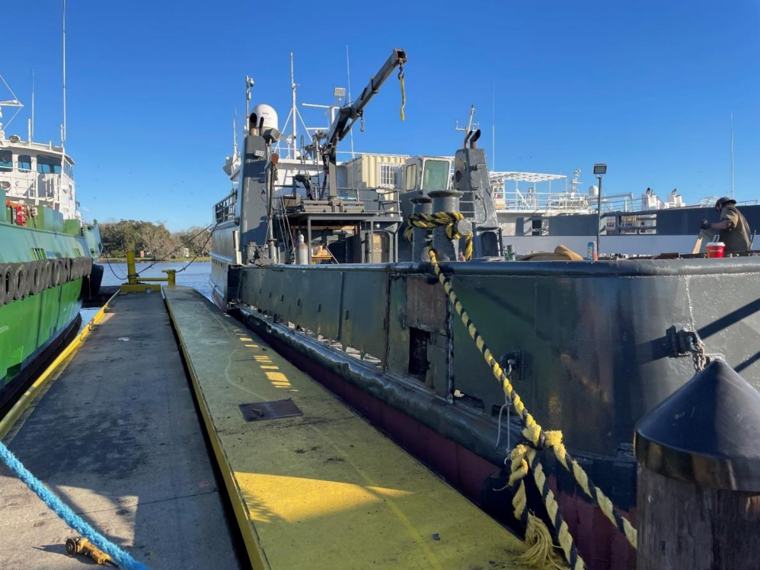
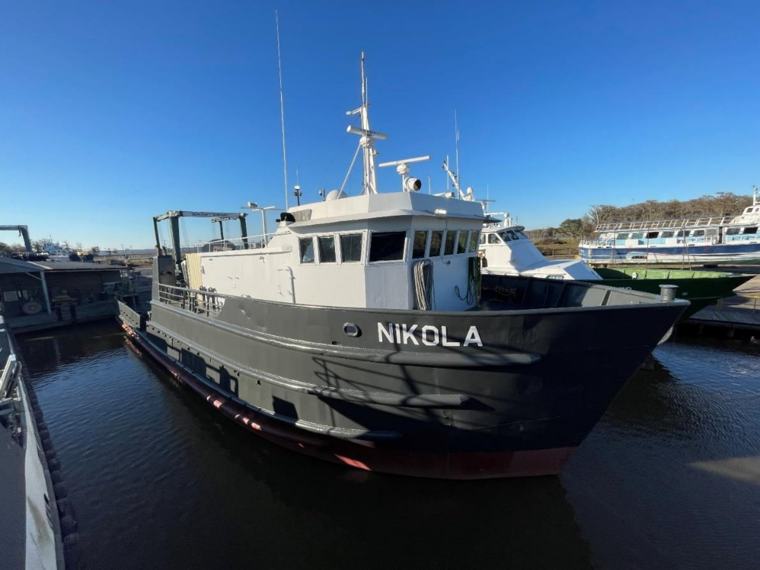
M/V Nikola
A 112-foot steel utility vessel converted for offshore placer recovery. Deck-mounted excavator and crane, onboard sluice recovery, and accommodation for a full rotating crew through the Bering Sea season.
- Built1980 · Houma, Louisiana
- BuilderUniversal Iron Works
- Length112.3 ft
- HullSteel
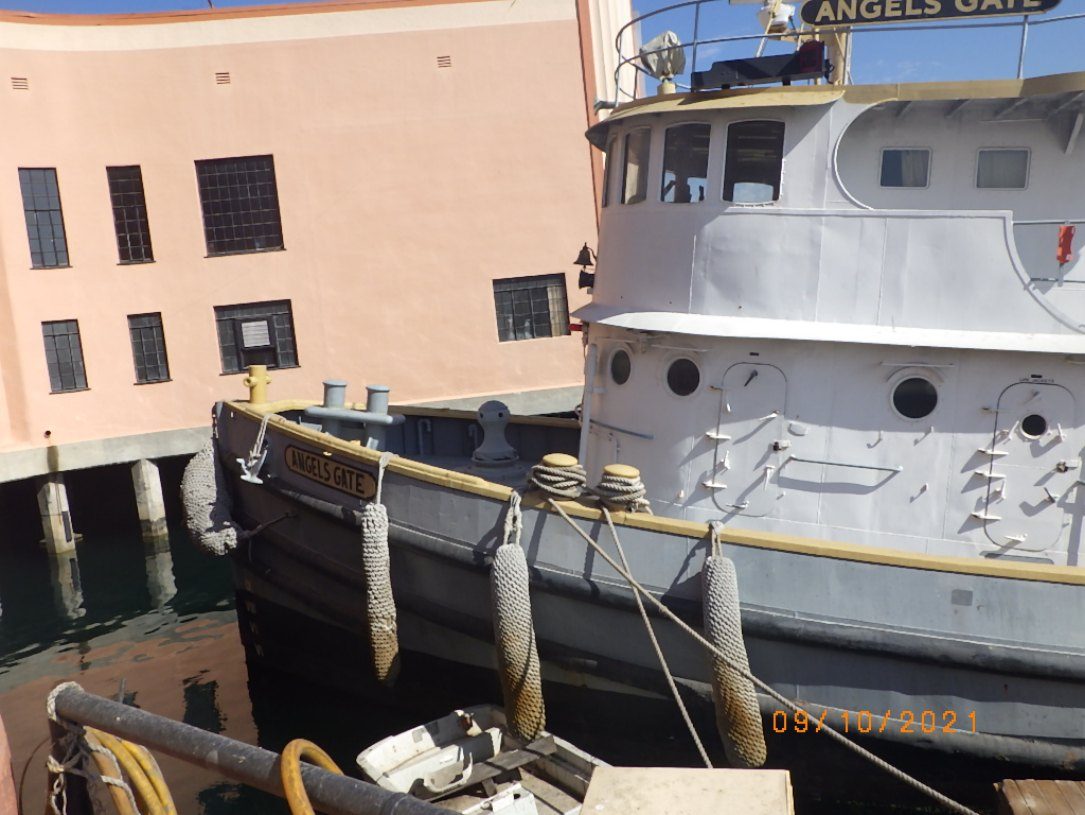
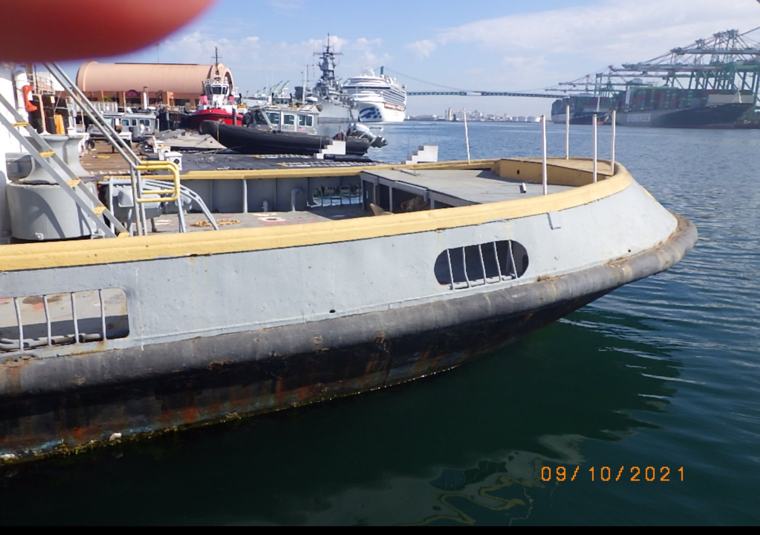
M/V Stryker
A 1944 Army ST-class tug — hull ST-695, laid down at Decatur Iron & Steel in Alabama during the Second World War. She carries crew, fuel, and equipment, and stands by the mining vessel through the season.
- Built1944 · Decatur, Alabama
- BuilderDecatur Iron & Steel Co., Shipbuilding Division
- Length130 ft
- HullSteel
Six months to do a year's work.
Scrub through the operating window.
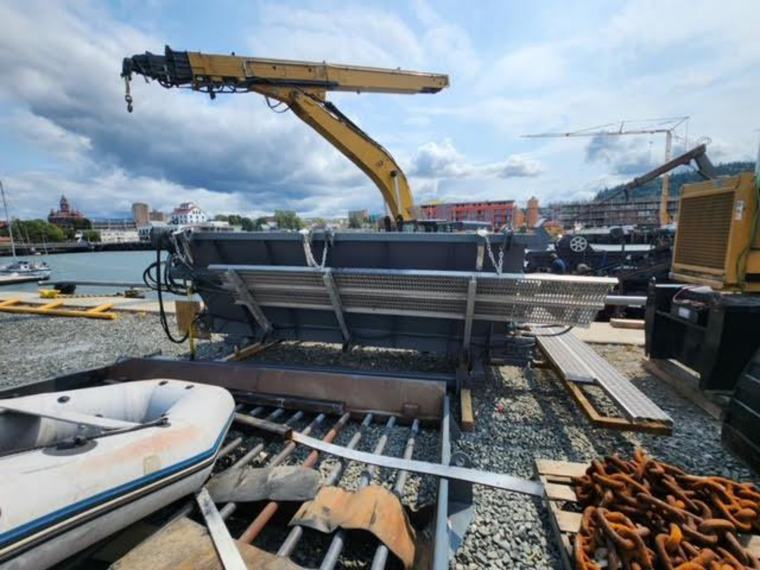
Fit-out and the run north
Winter maintenance closes out and the vessels are provisioned. Gear is loaded, the recovery plant is set on deck, and the fleet stages for the transit to Nome as the ice retreats out of Norton Sound.
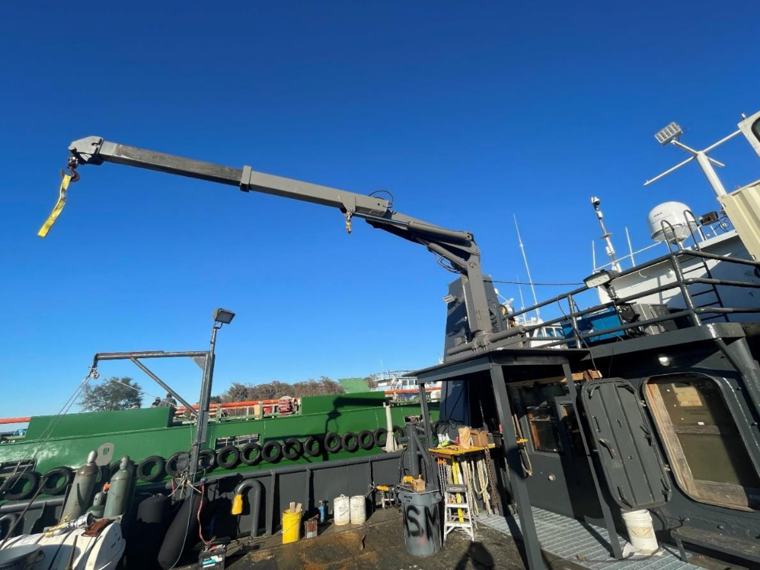
On station
The Nikola takes up position over the lease ground. The excavator and crane are commissioned on deck, moorings are set, and the first recovery runs establish grade against the survey.
Peak production
The longest days of the year and the calmest water of the season. This is the stretch the whole year is built around — continuous operation, crew rotating through, the plant running as close to around the clock as weather allows.
Sustained operation
Production continues while the weather holds. Maintenance is done in place, between runs, because coming off station costs days that cannot be bought back later in the year.
Weather closes in
Bering Sea autumn arrives early and hard. Operating windows shorten between blows, and the decision to keep working or to start demobilising gets made on the forecast, not the calendar.
Demobilise and lay up
Equipment comes off, the vessels transit south, and the season closes out. Survey and repair work is scoped over the winter so the fleet is ready to sail again in May.
The vessels, up close.
Photographed during condition-and-value survey — bow to engine room.
Participation in the operation
True North Mining works with a small number of private investors. Any participation is offered solely through definitive offering documents, and only to investors whose accredited status has been verified.